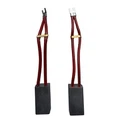
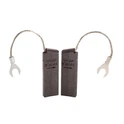
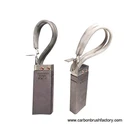
Common Causes of Washing Machine Motor Carbon Brush Burnout

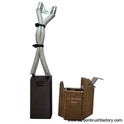
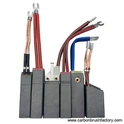
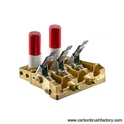
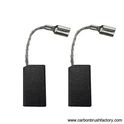
Carbon brushes are typically used in series-wound motors (common in front-load/drum washers). Issues such as ablation, blackening, sparking, or melting are fundamentally caused by excessive current, poor contact, or mechanical binding.
1. Carbon brush wear (most common)
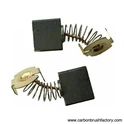
The brush wears down to its limit; spring pressure becomes insufficient, causing poor contact with the commutator. Violent sparking occurs at high speeds, and the resulting electric arc chars or shatters the brush.
Symptoms: Very short brush, excessive carbon dust/residue, and black burn marks on the commutator surface.
2. Commutator (motor copper rotor) contamination or ablation
Commutator grooves become clogged with carbon dust and oil/grease, reducing insulation and causing arcing.
Copper segments develop grooves or uneven surfaces; the brush cannot make proper contact, and continuous heavy arcing burns the brush directly.
If the brush is replaced without sanding and cleaning the commutator, the new brush will quickly burn out as well.
3. Abnormal carbon brush spring pressure
Spring fatigue/softening: Low pressure leads to poor contact, sparking, and brush burnout.
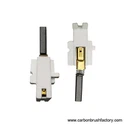
Spring binding or deformation: The brush gets stuck in the holder, unable to extend or retract freely; it loses contact with the rotor, causing sparking and burnout.
Deformation or loosening of the plastic brush holder causes the brush position to shift.
4. High mechanical resistance or excessive motor load
Motor bearings lack lubrication or are seized due to wear, making rotation difficult; the operating current spikes, causing the brush to overheat and burn out.
Washing machine overload: Overstuffing with clothes causes motor overload and high current, leading to brush overheating and ablation.
5. Voltage or circuit issues
High voltage or partial short-circuit in motor windings: Motor current increases, keeping the brush at high temperatures.
Loose wiring terminals: Heat generated at the connection point conducts to the brush area.
6. Mismatched carbon brush parts
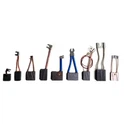
Incorrect size or material hardness: Brushes that are too hard scratch the commutator; those that are too soft wear out rapidly and burn easily.
Must use the specific model of carbon brush; generic replacements are not suitable. Quick Inspection Steps
Check the carbon brushes: Look for excessive wear or breakage; verify that the springs have proper tension and that the brushes slide smoothly within their holders.
Check the commutator's copper surface: Look for blackening, pitting, or grooving; if burn marks are present, sand them clean with fine-grit sandpaper and clear any carbon dust from the gaps between the copper segments.
Manually rotate the motor shaft: Check for binding or unusual noises to determine if the bearings are damaged.
Test the motor windings for localized short circuits.
⚠️ If a newly installed carbon brush burns out again after a very short time, do not simply keep replacing the brushes; the issue lies elsewhere-most likely a damaged commutator, seized bearings, or a fault in the motor windings.