


Carbon Brush Holder
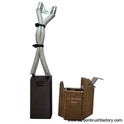
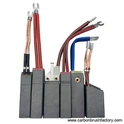
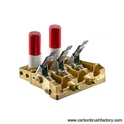
Carbon brush holders are designed to securely house the carbon brushes and ensure they maintain proper contact with the commutator or slip rings. The holder’s design and construction are critical for optimal brush performance and motor efficiency.
Why Choose Us
Quality Control
The factory adheres to the principle of quality first and has a strict quality control and quality inspection system to ensure that every product meets standards and requirements.
Main products
Mainly produces: Power tool carbon brushes (makita, bosch, dewalt, hilti etc), household appliance carbon brushes (washing machines, vacuum cleaners, coffee machines, wall breakers etc), industrial carbon brushes (wind turbines, thermal generators, train traction machines etc)
Rich experience
Carbonpro industry llc was established in 1998 and has 25 years of experience in carbon brush production, focusing on manufacturing high-quality products and providing first-class services.
Professional team
With advanced production equipment and technical team, it adopts efficient production processes and is committed to maintaining environmental friendliness and reducing environmental impact through sustainable production methods.


Product Categories
Latest Products
Benefits of Carbon Brush Holder
Withstand high temperatures
One of the primary advantages of carbon brushes holder is their ability to withstand high temperatures. Carbon has excellent thermal conductivity, allowing it to dissipate heat effectively. This characteristic makes carbon brushes holder ideal for applications where there is a lot of heat generation, such as in electric motors and generators. Their ability to handle high temperatures ensures that they do not wear out quickly, thus increasing the lifespan of the motor or generator.
Their low coefficient
Another advantage of carbon brushes holder is their low coefficient of friction. Carbon has a natural lubricating property, which reduces the friction between the brush and the commutator or slip rings in a motor or generator. This low friction coefficient not only reduces wear and tear but also minimizes the amount of heat generated during operation. As a result, the carbon brushes holder contribute to improved energy efficiency and lower maintenance costs.
Durability
Durability is another significant advantage of carbon brushes holder. Due to their composition and design, carbon brushes holder have a longer lifespan compared to alternative brush materials. They can withstand heavy loads and continuous operation without significant wear and tear, making them ideal for demanding applications. Additionally, carbon brushes holder have self-lubricating properties, which further enhances their durability and reduces the need for frequent replacements.
Versatility
Versatility is yet another advantage of carbon brushes holder. They can be customized to meet specific requirements, such as different shapes, sizes, and compositions. This versatility allows carbon brushes holder to be used in various industries, including automotive, aerospace, power generation, and electronics. Whether it is for a small handheld device or a large-scale industrial machine, carbon brushes holder can be tailored to suit the specific needs of the application, making them highly adaptable.
Types of Carbon Brush Holder


Graphite Brushes
Graphite is layered and bound with resin to make a layered brush material. The excellent riding qualities and controlled filmmaking of these graphite brushes set them apart on slip rings and commutators alike. The quick filming properties of graphite brushes safeguard the commutator or slip ring when used in polluted conditions. In polluted settings, their lower absorption and higher density contribute to less commutator threading.
Carbon Graphite Brushes
Graphite carbon brushes for electric motors are among the first varieties of carbon brushes. Even though they are made of incredibly strong materials, they can usually only sustain lower current densities on older, slower machines. Because of its high friction, this type of material has not been used much recently.
Metal Graphite Carbon Brushes
Typically, natural graphite combined with tiny metal particles is used to create metal graphite "carbon brushes for electrical motors". Copper is the most commonly used metal, however, lead, tin, and silver are all used infrequently. Because of its low resistance, metal graphite is perfect for a wide range of applications. Low voltage and high brush current density plating-producing commutators employ metal graphite brushes. They run on the wound rotor induction motor rings with a high brush current density. Because of its lower contact drop, metal graphite brushes are used in conjunction with grounding brushes.
Electrographic Carbon Brushes
The density and robustness of motor brushes made of electrographic carbon set them apart. This is a result of the way the raw ingredients required to make these brushes are made. Using it in conjunction with the brush plate for a secure connection results in better commutating ability, performance at high temperatures and low humidity, and ultimately longer life. With the aid of treatments, electrographic materials can perform effectively in a variety of contaminated environments.
Application of Carbon Brush Holder
Machine Tools
Carbon Brush Holder are commonly used in machine tools such as lathes, milling machines, and drills. They provide the necessary power and torque for cutting, shaping, and drilling operations.
Conveyors and Material Handling
Carbon Brush Holder find applications in conveyor systems and material handling equipment. They are used to drive conveyor belts, rollers, and other mechanisms for efficient movement of goods in factories and warehouses.
Industrial Pumps
Carbon Brush Holder are employed in various types of pumps, including centrifugal pumps, gear pumps, and reciprocating pumps. They provide the necessary power for fluid transfer and circulation in industrial processes.
HVAC Systems
Carbon Brush Holder are used in heating, ventilation, and air conditioning (HVAC) systems for driving fans, blowers, and compressors. They provide the required airflow and temperature control in industrial buildings.
Robotics and Automation
Carbon Brush Holder are utilized in industrial robots and automation systems. They offer precise control and high torque, enabling accurate positioning and movement in manufacturing processes.
Industrial Mixers and Agitators
Carbon Brush Holder drive mixers and agitators used in industries such as pharmaceuticals, food processing, and chemicals. They provide the necessary power for blending, mixing, and stirring applications.
Choosing the Right Carbon Brush Holder
Choosing the right brush holder is crucial for the longevity and efficient operation of your motor. Here are some factors to consider
Material
Brush holders can be made from various materials, such as plastic, brass, or other metals. The choice of material will depend on the specific requirements of your motor.
Size
The holder should be of the correct size to fit the brushes and commutator properly.
Design
The design of the holder should suit the type and design of the motor. For instance, larger motors may require robust box brush holders, while smaller motors might work well with simple clip brush holders.
Steps for Replacing Carbon Brush Holder
Identify the Type
Ensure you have the correct type and size of replacement brushes for your specific motor model.
Disconnect Power
Always disconnect the motor from the power source before starting any maintenance work.
Remove the Holder
Carefully remove the brush holder to access the worn brushes.
Replace the Brushes
Insert the new carbon brushes into the holder, ensuring proper alignment and contact.
Reassemble
Reassemble the holder and ensure everything is securely in place.
Test the Motor
Reconnect the motor to the power source and test it to ensure the new brushes are functioning correctly.
Cleaning Carbon Brush Holders
Shut down the equipment
Before attempting to clean or service the carbon brush holders, it is important to shut down the equipment completely. This will prevent any accidental electrocutions or damage to the machine. Additionally, you should wait for the machine to cool down before starting any work.
Remove the carbon brushes
Next, remove the carbon brushes from the holders. Depending on the machine, this may require some disassembly. Be sure to follow the manufacturer's instructions carefully to avoid causing any damage.
Clean the carbon brush holders
Using a soft brush or cloth, gently clean the carbon brush holders. Be careful not to use anything too abrasive, as this could damage the holders. If the holders are particularly dirty, you can use a small amount of alcohol to help dissolve any grime or buildup.
Inspect the holders for damage
While you are cleaning the carbon brush holders, it is a good idea to inspect them for any signs of damage. Look for cracks, chips, or other signs of wear and tear. If you notice any damage, the holders may need to be replaced.
Lubricate the holders
Once the holders are clean and free of damage, you should lubricate them lightly. This will help to ensure that the carbon brushes move smoothly and make good contact with the machine. You can use a small amount of silicone grease or another appropriate lubricant.
Reinstall the carbon brushes
After the carbon brush holders are cleaned, inspected, and lubricated, you can reinstall the carbon brushes. Be sure to follow the manufacturer's instructions carefully to ensure they are installed correctly. You should also check to make sure the brushes move freely and make good contact with the machine.
Test the equipment
Finally, you should test the equipment to make sure it is working properly. Check for any unusual noises or vibrations, which could be a sign of a problem. If everything looks and sounds good, you can rest assured that your carbon brush holders are clean and working properly.
Maintenance Practices for Carbon Brush Holder
Given their critical role, regular inspection and timely maintenance of motor brush holders are imperative. Here are some steps to ensure the efficient functioning of your motor’s brush holders.
Regular Cleaning
Accumulation of dust or carbon particles can affect the contact between the brush and the commutator. Regular cleaning helps maintain optimal electrical transfer.
Inspection for Wear and Tear
Over time, brush holders may show signs of wear, such as cracks or deformities. Regular inspection can help detect these issues early and prevent further damage.
Replacement
If a brush holder is worn out or damaged, it should be replaced immediately to prevent motor failure. Always ensure that the replacement is of the right size and material for your specific motor.
Our Factory
Carbonpro industry llc is a factory specializing in the production of motor carbon brushes. Mainly produces: power tool carbon brushes (Makita, Bosch, Dewalt, Hilti etc), household appliance carbon brushes (washing machines, vacuum cleaners, coffee machines, wall breakers etc), industrial carbon brushes (wind turbines, thermal generators, train traction machines etc), automotive carbon brushes, forklift carbon brushes, small motor carbon brushes, silver carbon brushes, and carbon brush holders for carbon brushes. CARBONPRO INDUSTRY LLC has established a sound management system with integrity, efficiency and performance as its core competitiveness, and provides customers with world-class services as its strategic goal by focusing on innovation, improving quality, timely delivery, rapid response and cost control. We hope to create greater value for more customers through our unremitting efforts.


FAQ
Q: What is the main function of a brush holder?
Q: What is brush holder assembly?
Q: What is the function of carbon brush holder?
Q: How to maintain carbon brushes, brush holders, commutators, and slip rings?
Q: How do I know if my carbon brush is worn out?
Q: What happens when carbon brushes wear out?
Q: Do carbon brushes need to bed in?
Q: What do bad carbon brushes look like?
Q: Why is it important to lift the brushes from their respective holders?
Q: What is the life of carbon brush?
Q: Why do carbon brushes wear unevenly?
Q: Can you lubricate carbon brushes?
Q: How do I know what size carbon brush I need?
Q: Do brushes touch the commutator?
Q: What causes arcing between brushes and commutator?
Q: Do carbon brushes get hot?
Q: How to tell if a brushed motor is bad?
Q: What keeps the brushes in good contact with the commutator?
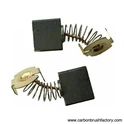
A spring is typically used with the brush, to maintain constant contact with the commutator. As the brush and commutator wear down, the spring steadily pushes the brush downwards towards the commutator.
Q: Do carbon brushes rotate?
Q: Which way do carbon brushes go in?
We're professional carbon brush holder manufacturers and suppliers in China, specialized in providing high quality customized service. We warmly welcome you to buy carbon brush holder in stock here from our factory. For price consultation, contact us.
carbon brush holder