


Forklift Carbon Brush
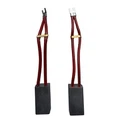
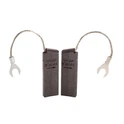
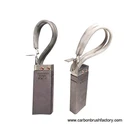
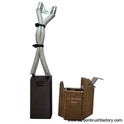
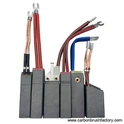
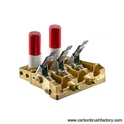
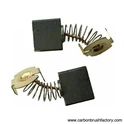
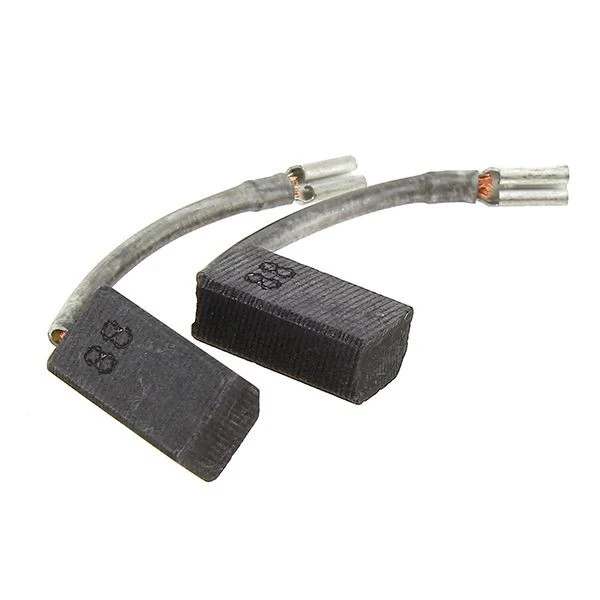
Forklift Carbon Brush are electromechanical conducting devices that connect to moving parts to provide an electric current. They are typically used in motors, generators and alternators. Many carbon brush uses exist, but the three basic uses are in household applications that run on alternating current (AC), automotive applications that run on direct current (DC) and industrial applications that run on both AC and DC.
Why Choose Us
Quality Control
The factory adheres to the principle of quality first and has a strict quality control and quality inspection system to ensure that every product meets standards and requirements.
Main products
Mainly produces: Power tool carbon brushes (makita, bosch, dewalt, hilti etc), household appliance carbon brushes (washing machines, vacuum cleaners, coffee machines, wall breakers etc), industrial carbon brushes (wind turbines, thermal generators, train traction machines etc)
Rich experience
Carbonpro industry llc was established in 1998 and has 25 years of experience in carbon brush production, focusing on manufacturing high-quality products and providing first-class services.
Professional team
With advanced production equipment and technical team, it adopts efficient production processes and is committed to maintaining environmental friendliness and reducing environmental impact through sustainable production methods.

Product Categories
Latest Products
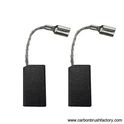
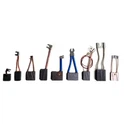
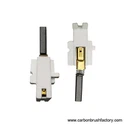
Benefits of Forklift Carbon Brush
They Have High Melting Point
Carbon metal has a melting point that is often greater than that of copper and other common metals. Carbon brushes have a melting temperature of 3550 degrees Celsius, while copper has a melting point of just 1080 degrees Celsius.Motor Brushes/Electrical brush on a dc motor are well-known due to their proximity to the commutator. As a result, while the motor is operating, it produces sparks and friction between the brushes and the commutator. When the temperature rises, the copper brush becomes unstable, which is why we use it in the first place.
Usage of Soft Metal
In contrast to the copper brush, the carbon brush/electrical brush is often made of a softer metal. While the motor is operating, the brush and commutator are always in contact, resulting in friction. Due to the brush's softness, the commutator will remain undamaged. Because copper is so hard, we will damage the commutator if we use a copper brush.
Negative Temperature Coefficient
This is not a good idea owing to the negative temperature coefficient of the carbon brush or motor brush. Because there is a direct connection between rising temperature and lowering resistance, the temperature of the motor increases during operation as a consequence of friction and heat production. This is common knowledge. As a result of the increased temperature, the resistance of the carbon brush will drop, amplifying the current surge.
Amorphous
Despite its rectangular form, the carbon brush is surprisingly malleable, which makes it an indispensable tool. To get a circular commutator, we just need to connect our new brush (electrical brush) to it and power on the motor.
Easy Lubrication
It, like the Evolution Brushes and the carbon brush, is self-lubricating. As a consequence, there is no need for additional cooling oil, lubricating oil, or Greece. When the engine is turned off, the carbon brushes are automatically permitted to cool.
Some Down points you need to know
High contact resistance results in a voltage loss of about 2 V. Consequently, they are not well-suited for usage in tiny devices where voltage represents a significant part of the overall power of the device."In order to effectively dissipate heat without significantly raising the working temperature, the commutator must be bigger than it would be with copper brushes due to the high loss.Compared to copper brushes, which have a higher current density per square centimeter, these brushes need larger brush holders.
Types of Forklift Carbon Brush



Graphite Brushes
Graphite is layered and bound with resin to make a layered brush material. The excellent riding qualities and controlled filmmaking of these graphite brushes set them apart on slip rings and commutators alike. The quick filming properties of graphite brushes safeguard the commutator or slip ring when used in polluted conditions. In polluted settings, their lower absorption and higher density contribute to less commutator threading.
Carbon Graphite Brushes
Graphite carbon brushes for electric motors are among the first varieties of carbon brushes. Even though they are made of incredibly strong materials, they can usually only sustain lower current densities on older, slower machines. Because of its high friction, this type of material has not been used much recently.
Metal Graphite Carbon Brushes
Typically, natural graphite combined with tiny metal particles is used to create metal graphite "carbon brushes for electrical motors". Copper is the most commonly used metal, however, lead, tin, and silver are all used infrequently. Because of its low resistance, metal graphite is perfect for a wide range of applications. Low voltage and high brush current density plating-producing commutators employ metal graphite brushes. They run on the wound rotor induction motor rings with a high brush current density. Because of its lower contact drop, metal graphite brushes are used in conjunction with grounding brushes.
Electrographic Carbon Brushes
The density and robustness of motor brushes made of electrographic carbon set them apart. This is a result of the way the raw ingredients required to make these brushes are made. Using it in conjunction with the brush plate for a secure connection results in better commutating ability, performance at high temperatures and low humidity, and ultimately longer life. With the aid of treatments, electrographic materials can perform effectively in a variety of contaminated environments.
Application of Forklift Carbon Brush
Household
Carbon brushes are a common component in household appliances such as power tools, gardening equipment and office equipment. Vacuum cleaner turbines, hair and hand dryers, and washing and drying machines are also common applications of this type of carbon brush, which is generally much smaller than its industrial or automotive counterparts. Micro-carbon brushes, for example, are precision parts designed for toys, electric razors, and audio and video equipment. In such small dimensions, carbon brushes are often placed inside tiny battery-operated mini-motors designed to transmit power silently and with the least amount of friction to moving parts such as wheels and razors.
Automotive
Cars generally use small and auxiliary carbon brushes for DC motors, starters and alternators. Alternators are devices that convert mechanical energy to electrical energy. They consist of a wire-coiled rotor that produces a magnetic field when a current runs through it. Automotive carbon brushes are used to supply the current to the wire coil in the alternator. Automotive carbon brushes can be found in most passenger vehicles, motorcycles, trucks and oil- and diesel-fueled cars. Even smaller, specially designed carbon brushes are used in steering wheels and contacts for airbags.
Industrial
Industrial carbon brushes are used on large commutator machines, in which the current between the rotor and external circuit is periodically reversed. These include AC and DC motors, slipring rotors, traction motors, turbogenerators, windmills, hydro power stations and steel, cement and paper mills. Industrial carbon brushes also can be used to power battery-driven cars, cable cars and trolley buses, and they are often used in construction vehicles such as forklift trucks and cranes. Brushes connect the generator to the rotor through the commutator, which has copper segments, or lands. The brushes bear the brunt of wear and tear between the rotating rotor and the non-moving generator while conducting electricity between them. Industrial brushes are specially designed to withstand extreme temperatures.
Carbon brushes are one of the most important components of a motor even though they are usually disregarded.
The tiny component of a motor or generator that transfers electrical current from the stationary wires (stator) to the revolving wires (rotor) is referred to as a carbon brush, also known as a motor brush. Typically composed of one or more carbon blocks, the brush may also have one or more shunts or terminals.
Typically, a motor has many carbon brushes to carry electrical current. The brushes are divided into five brush-grade families, with one suitable for each application.A carbon brush has three operating parameters: mechanical, electrical, and physical/chemical.
Installation of Forklift Carbon Brush

Clean the motor: Before installing the carbon brush, you need to clean up the dust and debris on the surface of the motor so as not to affect the operation of the motor.
Install the new carbon brush: Gently insert the new carbon brush into the carbon brush holder and push it in according to the original position, and make it in good contact with the motor. Note: The carbon brush should not exceed the range of the carbon brush holder, otherwise it will affect the operation of the motor.
Install the old carbon brush: When installing the old carbon brush, you need to clean the carbon brush first, and check whether it is worn or broken, if there is a problem, it needs to be replaced in time. Install the old carbon brush in its original position and make sure it is in good contact with the motor.
How to Detect the Quality of Forklift Carbon Brush
Appearance inspection
The quality of the carbon brush can be preliminarily judged through the visual inspection. First of all, check whether the surface of the carbon brush is uniform, whether there are unevenness, bubbles, cracks and other defects. Secondly, it is necessary to check whether the size of the carbon brush meets the requirements, especially whether the length and diameter of the carbon brush are matched with the machine. Finally, check if the color of the carbon brush is consistent, as different colors may cause the density and conductivity of the carbon brush to differ.
Hardness testing
Hardness is one of the important indicators to measure the quality of carbon brushes. The higher the hardness, the greater the density, the better the conductivity, and the longer the service life of the carbon brush. We can measure the hardness of carbon brushes with a hardness tester that meets the requirements, usually the hardness of carbon brushes is between 5-8HRA.
Conductivity testing
Electrical conductivity is another important indicator, and we can use a multimeter to test the conductivity of carbon brushes. First clamp the carbon brush in the test clip of the multimeter according to the specified method, and then connect the test pen tip to both ends of the carbon brush, if the carbon brush conductivity is good, the value on the multimeter should fluctuate within the normal range, if the value exceeds the normal fluctuation range, it means that the conductivity of the carbon brush is not good.
Anti-wear detection
Carbon brushes rub a lot during use, so wear resistance is another metric to test. We can use an abrasion tester to test the wear resistance of carbon brushes. During the test, the carbon brushes are placed in the wear tester according to the prescribed method, and then the wear test is carried out. After the test, you can observe the wear and tear of the carbon brush to judge its anti-wear ability.
Our Factory
Carbonpro industry llc is a factory specializing in the production of motor carbon brushes. Mainly produces: power tool carbon brushes (Makita, Bosch, Dewalt, Hilti etc), household appliance carbon brushes (washing machines, vacuum cleaners, coffee machines, wall breakers etc), industrial carbon brushes (wind turbines, thermal generators, train traction machines etc), automotive carbon brushes, forklift carbon brushes, small motor carbon brushes, silver carbon brushes, and carbon brush holders for carbon brushes. CARBONPRO INDUSTRY LLC has established a sound management system with integrity, efficiency and performance as its core competitiveness, and provides customers with world-class services as its strategic goal by focusing on innovation, improving quality, timely delivery, rapid response and cost control. We hope to create greater value for more customers through our unremitting efforts.


FAQ
Q: How many hours do carbon brushes last?
Q: What causes carbon brushes to wear out?
Q: What are the disadvantages of carbon brushes?
Q: What is the life of carbon brush?
Q: Do carbon brushes get hot?
Q: Can you lubricate carbon brushes?
Q: How do you inspect carbon brushes?
Q: Should carbon brushes spark?
Q: What are the alternatives to carbon brushes?
Q: What does the number on a carbon brush mean?
Q: How do you know if carbon brushes are bad?
Q: Which way do carbon brushes go in?
Q: How do I stop the commutator from sparking?
Q: What is the current capacity of a carbon brush?
Q: What is uneven wear on carbon brushes?
Q: What is the resistance of a carbon brush?
Q: When should you replace a brush?
Q: What is the life of carbon brush?
Q: What maintenance is required if there is excessive sparking at the brushes?
Q: How many hours do carbon brushes last?
We're professional forklift carbon brush manufacturers and suppliers in China, specialized in providing high quality customized service. We warmly welcome you to buy forklift carbon brush in stock here from our factory. For price consultation, contact us.
forklift carbon brush, Forklift Motor Brushes