


Vacuum Cleaner Carbon Brush
Vacuum cleaner carbon brush are a wearable part found in power tools that conduct electrical current between stationary and rotating elements inside a motor or generator.carbon is used as it conducts electricity well, but it's also soft enough to give a consistent contact point.however this means they wear over time, and so you need to replace them once they become too worn.
Why Choose Us
Quality Control
The factory adheres to the principle of quality first and has a strict quality control and quality inspection system to ensure that every product meets standards and requirements.
Main products
Mainly produces: Power tool carbon brushes (makita, bosch, dewalt, hilti etc), household appliance carbon brushes (washing machines, vacuum cleaners, coffee machines, wall breakers etc), industrial carbon brushes (wind turbines, thermal generators, train traction machines etc)
Rich experience
Carbonpro industry llc was established in 1998 and has 25 years of experience in carbon brush production, focusing on manufacturing high-quality products and providing first-class services.
Professional team
With advanced production equipment and technical team, it adopts efficient production processes and is committed to maintaining environmental friendliness and reducing environmental impact through sustainable production methods.


Product Categories
Latest Products
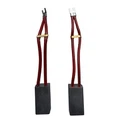
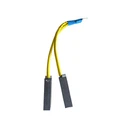
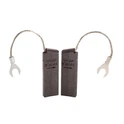
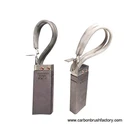
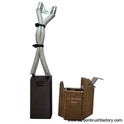
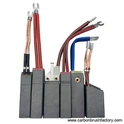
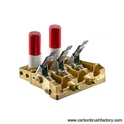
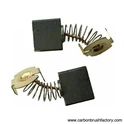
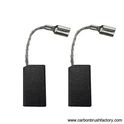
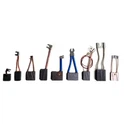
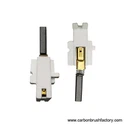
Types of Vacuum Cleaner Carbon Brush
Graphite Brushes
Graphite is layered and bound with resin to make a layered brush material. The excellent riding qualities and controlled filmmaking of these graphite brushes set them apart on slip rings and commutators alike. The quick filming properties of graphite brushes safeguard the commutator or slip ring when used in polluted conditions. In polluted settings, their lower absorption and higher density contribute to less commutator threading.
Carbon Graphite Brushes
Graphite carbon brushes for electric motors are among the first varieties of carbon brushes. Even though they are made of incredibly strong materials, they can usually only sustain lower current densities on older, slower machines. Because of its high friction, this type of material has not been used much recently.
Metal Graphite Carbon Brushes
Typically, natural graphite combined with tiny metal particles is used to create metal graphite "carbon brushes for electrical motors". Copper is the most commonly used metal, however, lead, tin, and silver are all used infrequently. Because of its low resistance, metal graphite is perfect for a wide range of applications. Low voltage and high brush current density plating-producing commutators employ metal graphite brushes. They run on the wound rotor induction motor rings with a high brush current density. Because of its lower contact drop, metal graphite brushes are used in conjunction with grounding brushes.
Electrographic Carbon Brushes
The density and robustness of motor brushes made of electrographic carbon set them apart. This is a result of the way the raw ingredients required to make these brushes are made. Using it in conjunction with the brush plate for a secure connection results in better commutating ability, performance at high temperatures and low humidity, and ultimately longer life. With the aid of treatments, electrographic materials can perform effectively in a variety of contaminated environments.
Application of Vacuum Cleaner Carbon Brush
Carbon brushes in the appliance industry
There are many types of appliances in your household that make use of carbon brushes that you may not even realize. A few examples of just some of these appliances include everything from your washer and drier to any number of the power tools in your garage.When it comes to carbon brushes, the smaller appliances will have significantly smaller ones, although they will function in the same manner as ones in the larger appliances. Since smaller brushes still need to perform the same duties as the larger ones, the smaller ones are often driven with the help of their own micro motors.
Carbon brushes in the automotive industry
There are various parts of an automobile's motor that makes use of carbon brushes. Just one of the components is the vehicle's alternator. Looking at the function and inner workings of an alternator will help you get a better idea of the importance of the brushes in motors.An alternator has a rotor that is made from coiled wire that is used to create a magnetic field when an electrical current goes through it. The brushes will create that current which will then be channeled to the rotor.
Alternator
An alternator is the part of the motor that's overall function is to charge the vehicle's battery. This is why a vehicle with a bad alternator will experience issues such as a stalling engine, dim lights, and a dead battery. Some of the other vehicle components that use carbon brushes include the starter, air conditioner, the wipers, fans, pumps, steering wheels, and even the windshield wipers.
The Choice of Vacuum Cleaner Carbon Brush Material


Tungsten carbide
Tungsten carbide is one of the common materials of carbon brushes, which has the advantages of high hardness and good wear resistance, and is suitable for occasions with harsh working environment and frequent friction. However, due to its high hardness, the frictional heat generated by friction with metal is easy to cause it to sinter, resulting in short circuit and burnout of carbon brushes. At the same time, the price of tungsten carbide is also relatively high.
Pure carbon
Pure carbon is one of the mainstream materials of carbon brushes, due to its low density, low volatility, good conductivity and other characteristics, so that it has good friction and conductivity, suitable for equipment with high-speed rotation. In addition, pure carbon also has the advantages of good wear resistance and high temperature resistance, and is widely used in various industries.
Copper
Copper is a common carbon brush material, which has the advantages of excellent conductivity and good machinability, and is suitable for equipment with large load currents. Copper has excellent conductivity and resistivity, which makes it perform well in occasions where stable current is required, but copper produces more wear dust, which can easily affect the service life of the equipment.
Silver
Silver material is a high-end material for carbon brushes, which is widely used in high-speed machinery manufacturing, power tools, motors and generators because of its excellent electrical conductivity, strong oxidation resistance and long service life. However, its cost is high and its application is limited.
Process of Vacuum Cleaner Carbon Brush
Creating the Carbon Block-The Right Material is Key
To begin, a block of carbon must be made from which the brushes for this batch will be carved out by hand.Materials are combined in a certain way to match the voltage and wattage of the power tool they'll be utilised with.There are a number of different materials that may be used to make power tool brushes, including carbon-graphite, copper graphite, and silver graphite.
Design the Carbon Brush & Cut it to Size
As a result, you need to ensure that the carbon brush's dimensions match those of the carbon brush holder it will be inserted into.Making the designs and reducing them down to size is a necessary step in this process.
Grind the Carbon Brush Body Smooth
It is critical to maintain a constant contact point, thus the brush must be grinded until the edges are smooth.
Check Measurements of the Brush Body Against Specs
This is a precautionary measure to check that the brush still fulfils the specifications. Negative tolerances of -0.1mm to 0mm are permitted.
Create a Hole and Embed Wire
A conductive wire must be inserted into the carbon brush to link the tool to the static component, so we drill a hole in the brush and insert the wire.
Weld the Wire to the Terminal
The termination must be welded to the wire's other end before it can be used with the power tool system.To guarantee the carbon brush has the correct pressure on the Commutator, certain brushes feature a spring design that has to have the correct tension, length, diameter, and thickness. The carbon brush's spring design must also be taken into account when the final product is being made.
What is the Correct Way to Install Vacuum Cleaner Carbon Brush?
First of all, make sure that the power is cut off to avoid electric shock accidents.
Open the housing of the motor and find the position of the carbon brush. Usually, the motor has carbon brush slots on both sides.
Use a screwdriver or wrench to remove the carbon brush cover. Note that the carbon brush cover may have several screws in place and need to be removed completely.
Remove the old carbon brush from the carbon brush slot. Check whether the carbon brushes are worn out, and if the wear is severe, they should be replaced with brand new ones.
Install the new carbon brush into the carbon brush slot. Make sure that the carbon brush is in good contact with the motor, and do not leave a gap so as not to affect the operation of the motor.
Reinstall the carbon brush cover and tighten the screws. Make sure the carbon brush cover is securely attached to the motor.
Check the carbon brush after installation to make sure that the carbon brush is not loose and can slide freely.
Close the housing of the motor and make sure the housing is tight.
Restore the power supply and turn it back on.
Common Fault Handling of Vacuum Cleaner Carbon Brush
The carbon brush is worn
Since carbon brushes are a friction material, they will inevitably wear out after long-term use. When the carbon brush is worn to a certain extent, its working efficiency will be significantly reduced, or even unable to work normally. At this time, the carbon brush should be replaced in time to ensure the normal operation of the equipment.
01
Poor contact of carbon brushes
The carbon brush is generally in contact with the motor rotor through the elastic carbon brush blade, and if the carbon brush blade is aged or elastic enough, it is easy to lead to poor contact. In addition, dust and dirt can also affect the contact between the carbon brush blades and the rotor. At this time, the surface of the carbon brush and the motor rotor can be gently wiped with fine sandpaper to remove surface oxides and loose dirt, and increase the contact area.
02
Carbon brush heating
Some tools will have the problem of carbon brushes heating up when they are in use. This is usually caused by the small contact area between the carbon brush and the rotating part, or the poor quality of the carbon brush material and the increased resistance. If the carbon brush is found to be hot during use, it should be stopped immediately, and the carbon brush should be checked and replaced to avoid subsequent losses.
03
Carbon brush life
The service life of different brands and specifications of carbon brushes is different, but no matter what type, they need to be checked regularly and replaced in time. If the equipment has not been used for a long time, it is best to remove the carbon brush for storage first to avoid aging and deformation.
04
How to Maintain Vacuum Cleaner Carbon Brush
Visual inspection
First, observe whether the carbon brush is visibly worn, broken, or corroded. If these issues are found, it may mean that the carbon brush has been damaged or needs to be replaced
Listen to the sound
During the operation of the motor, listen carefully to the sound of the motor. If you hear unusual sounds such as friction or knocking, this may indicate a problem with the carbon brush
Measure Resistance
Use a multimeter to measure the resistance between the carbon brush and the commutator. Under normal circumstances, there should be a certain resistance value between the two. If the resistance value is abnormal, it may indicate a problem with the carbon brush.
Replacement test
The suspected problematic carbon brush is exchanged with other normal carbon brushes. If the motor runs back to normal after replacement, then it can be determined that there is a problem with the original carbon brush.
Check for overheating and spark size
If the carbon brush is overheating or has a large spark while working, this may be an indication that it needs to be replaced
Check the contact surface and spring pressure
Make sure that the contact surface between the carbon brush and the slip ring is sufficient (usually not less than 70%) and that the spring pressure is normal. Insufficient or pressure failure is also a signal for replacement.
Regular maintenance and inspection
Regularly use a DC clamp meter to measure whether the current distribution is uniform, and use an infrared thermometer to check whether there is overheating. These maintenance measures help to identify and deal with problems in a timely manner.
Our Factory
Carbonpro industry llc is a factory specializing in the production of motor carbon brushes. Mainly produces: power tool carbon brushes (Makita, Bosch, Dewalt, Hilti etc), household appliance carbon brushes (washing machines, vacuum cleaners, coffee machines, wall breakers etc), industrial carbon brushes (wind turbines, thermal generators, train traction machines etc), automotive carbon brushes, forklift carbon brushes, small motor carbon brushes, silver carbon brushes, and carbon brush holders for carbon brushes. CARBONPRO INDUSTRY LLC has established a sound management system with integrity, efficiency and performance as its core competitiveness, and provides customers with world-class services as its strategic goal by focusing on innovation, improving quality, timely delivery, rapid response and cost control. We hope to create greater value for more customers through our unremitting efforts.


FAQ
Q: What is the difference between carbon brush and copper brush?
Q: Do carbon brushes need to bed in?
Q: How often should you replace vacuum brush?
Q: How to tell if motor brushes are bad?
Q: Why do carbon brushes wear out quickly?
Q: Can you lubricate carbon brushes?
Q: What is the life of carbon brush?
Q: Do carbon brushes need to bed in?
Q: How do I know if my carbon brush is worn out?
Q: What is the difference between AC and DC carbon brush?
Q: How does a carbon brush work?
Q: What is the construction of carbon brushes?
Q: What is the carbon brush treatment?
Q: How many hours do carbon brushes last?
Q: What happens when carbon brushes wear out?
Q: Do carbon brushes conduct electricity?
Q: What is the two reason on using carbon brushes?
Q: Are carbon brushes self lubricating?
Q: How many hours do carbon brushes last?
Q: How often do carbon brushes need replacing?
How often do carbon brushes need replacing? Carbon brushes generally last between one and five years. The exact amount of time it takes for carbon brushes to wear down depends on the tool in question, how often that tool is used and how many hours the tool has been in operation.
Q: Is it normal for carbon brushes to spark?
We're professional vacuum cleaner carbon brush manufacturers and suppliers in China, specialized in providing high quality customized service. We warmly welcome you to buy vacuum cleaner carbon brush in stock here from our factory. For price consultation, contact us.
Vacuum Cleaner Motor Carbon Brush, vacuum cleaner carbon brush