


Mersen Carbon Brush
Mersen Carbon Brush is also called electric brush, as a kind of sliding contact, it is widely used in many electrical equipment. Carbon brushes are mainly used in graphite, fat-impregnated graphite, and metal (copper, silver) graphite. A carbon brush is a device that transmits energy or signals between the fixed part and the rotating part of a motor or generator or other rotating machinery. It is generally made of pure carbon and a coagulant. A spring presses it tightly on the rotating shaft. When the motor rotates, the electric energy is transmitted to the coil through the commutator. Since its main component is carbon, it is called a carbon brush, which is easy to wear. It should be regularly maintained and replaced, and carbon deposits should be cleaned.
Why Choose Us
Quality Control
The factory adheres to the principle of quality first and has a strict quality control and quality inspection system to ensure that every product meets standards and requirements.
Main products
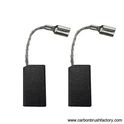
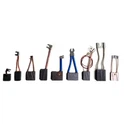
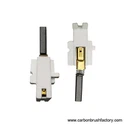
Mainly produces: Power tool carbon brushes (makita, bosch, dewalt, hilti etc), household appliance carbon brushes (washing machines, vacuum cleaners, coffee machines, wall breakers etc), industrial carbon brushes (wind turbines, thermal generators, train traction machines etc)
Rich experience
Carbonpro industry llc was established in 1998 and has 25 years of experience in carbon brush production, focusing on manufacturing high-quality products and providing first-class services.
Professional team
With advanced production equipment and technical team, it adopts efficient production processes and is committed to maintaining environmental friendliness and reducing environmental impact through sustainable production methods.


Product Categories
Latest Products
Benefits of Mersen Carbon Brush
Cost-Effective
Mersen Carbon Brush are generally more affordable compared to brushless motors, making them a cost-effective choice for many industrial applications.
High Starting Torque
Mersen Carbon Brush can provide high starting torque, making them suitable for applications that require quick acceleration or high initial load torque.
Robust Construction
These motors are typically designed to withstand harsh industrial environments, including temperature variations, dust, and vibrations. They are known for their durability and reliability.
Simple Control
Mersen Carbon Brush are relatively simple in design and can be controlled using standard motor control techniques, making them easy to integrate into existing industrial systems.
Speed Control
These motors can be easily controlled for speed variations by adjusting the voltage or current supplied to the armature, allowing for flexible operation in different industrial processes.
Types of Mersen Carbon Brush


Graphite Brushes
Graphite is layered and bound with resin to make a layered brush material. The excellent riding qualities and controlled filmmaking of these graphite brushes set them apart on slip rings and commutators alike. The quick filming properties of graphite brushes safeguard the commutator or slip ring when used in polluted conditions. In polluted settings, their lower absorption and higher density contribute to less commutator threading.
Carbon Graphite Brushes
Graphite carbon brushes for electric motors are among the first varieties of carbon brushes. Even though they are made of incredibly strong materials, they can usually only sustain lower current densities on older, slower machines. Because of its high friction, this type of material has not been used much recently.
Metal Graphite Carbon Brushes
Typically, natural graphite combined with tiny metal particles is used to create metal graphite "carbon brushes for electrical motors". Copper is the most commonly used metal, however, lead, tin, and silver are all used infrequently. Because of its low resistance, metal graphite is perfect for a wide range of applications. Low voltage and high brush current density plating-producing commutators employ metal graphite brushes. They run on the wound rotor induction motor rings with a high brush current density. Because of its lower contact drop, metal graphite brushes are used in conjunction with grounding brushes.
Electrographic Carbon Brushes
The density and robustness of motor brushes made of electrographic carbon set them apart. This is a result of the way the raw ingredients required to make these brushes are made. Using it in conjunction with the brush plate for a secure connection results in better commutating ability, performance at high temperatures and low humidity, and ultimately longer life. With the aid of treatments, electrographic materials can perform effectively in a variety of contaminated environments.
The Role of Mersen Carbon Brush
The function of the carbon brush is mainly to conduct electricity while rubbing against the metal. It is not the same as the metal-to-metal friction; when the metal is frictionally conductive, the friction force may increase, and at the same time, the junction may be sintered together; and Carbon brushes don't because carbon and metal are two different elements. Most of its uses are used in motors, and the shapes are various, square and round, and so on.
Carbon brushes are suitable for all kinds of motors, generators, and axle machines. It has good reversing performance and long service life. The carbon brush is used on the commutator or slip ring of the motor. As a sliding contact body for leading and leading current, it has good electrical conductivity, thermal conductivity and lubricating performance, and has a certain mechanical strength and the instinct of commutating sparks. Almost all motors use carbon brushes, which are an important part of the motor. Widely used in various AC and DC generators, synchronous motors, battery DC motors, crane motor collector rings, various types of welding machines and so on. With the development of science and technology, the types of motors and the working conditions of use are becoming more and more diverse.

Carbon brushes are primarily composed of carbon and other materials carefully selected to meet specific performance requirements. The unique properties of the primary component, carbon, make it an ideal material for electrical contact applications. The carbon used in carbon brushes is typically graphite, which has low electrical resistance, excellent electrical conductivity, and self-lubricating properties.
To improve the performance of carbon brushes, manufacturers often add other materials to the carbon brush composition. Metals such as copper, silver, or alloys may be added to improve electrical conductivity and heat dissipation. In addition, binders and fillers are used to enhance the mechanical strength and stability of carbon brushes. The careful balance of these elements gives carbon brushes optimal electrical and mechanical properties.
How to Choose Mersen Carbon Brush
Consider the equipment's operating conditions
The first thing to consider when choosing a mersen carbon brushg is the equipment's operating conditions. The spring's material, size, and shape should be selected based on factors such as the equipment's voltage, current, speed, and temperature. For example, high-speed equipment requires a more robust, stiffer spring than low-speed equipment. Similarly, equipment exposed to high temperatures requires a spring made of a heat-resistant material such as stainless steel or nickel-chromium alloy.
Check the carbon brush specifications
The carbon brush specifications also play a vital role in choosing the right spring. You should consider the brush's size, shape, and composition. The spring's dimensions and material should match the brush's specifications to ensure proper tension and contact pressure. The brush's composition also affects the spring's choice. For example, brushes with high copper content require a softer spring than brushes with low copper content.
Determine the required tension
The tension of the mersen carbon brush determines the contact pressure between the brush and the commutator or slip ring. Therefore, it is essential to determine the required tension for your equipment. The tension required depends on factors such as the equipment's current, voltage, and speed. You can use a tension gauge to measure the required tension accurately.
Consider the quality and durability
The quality and durability of the mersen carbon brushg are crucial factors to consider when selecting a spring. Poor-quality springs can lead to premature wear and tear of the carbon brushes, resulting in equipment failure. Therefore, it is essential to choose a spring made of high-quality materials that are durable and long-lasting.
How to Determine if Your Mersen Carbon Brush Require Replacement
Reduced Performance
An initial indicator is a decline in the tool's performance. You might find yourself needing to shake it to kickstart, and it may struggle to reach the high RPMs it once achieved.
Power Issues/Inconsistency
If your carbon brushes are wearing out, the tool may cut out during use, signalling complete wear.
Check Your Brushes
Accessing the brushes, often located near the motor housing, can be done by unscrewing a Carbon brush screw cap or opening the motor housing. If you observe minimal or no carbon remaining, it's time to replace the brushes. Some brushes have an AUTO-CUT feature, indicated by a small pin popping out, ensuring motor safety and signalling the need for new brushes.
Sparking/Arching
While slight sparking is typical, frequent large sparks may indicate poor brush-to-commutator contact, excessive brush wear, a dirty or damaged commutator, or incorrectly installed or incompatible brushes. Monitoring sparks through cooling vents can help assess the severity.
Burning Smell
An odour associated with burning indicates arching and other issues. If you encounter this smell, cease tool use immediately and consult a professional repairer for diagnosis. Identifying the specific smell is crucial for determining the appropriate solution.
How to Maintain Mersen Carbon Brush
Choosing The Right Carbon Brushes
Selecting the right brush is another crucial factor in maintaining your carbon brushes' performance. Various types of motors require different kinds of brushes. Therefore, understanding your motor's needs is key to choosing the appropriate carbon brush.
Recognizing The Signs Of Wear And Tear
Being aware of the signs of wear and tear on your carbon brushes is the first step in their maintenance. If you notice sparks, poor motor performance, or decreased electrical conductivity, it might be time to inspect your brushes.
Regular Inspection: A Key To Maintenance
Regular inspection is a proactive step that can help prevent minor issues from escalating into major problems. This process involves checking the brush for wear and tear, ensuring it isn't too loose or tight in its holder, and confirming that it's not cracked or damaged. By doing so, you can preserve the longevity and performance of your equipment.
Cleaning Carbon Brushes: Keeping Them Clean
Cleaning is another fundamental aspect of carbon brush maintenance. Dust and debris can accumulate on the brushes over time, reducing their efficiency. It's recommended to gently clean the brush surfaces using a soft cloth and be careful not to damage the carbon surface.
Our Factory
Carbonpro industry llc is a factory specializing in the production of motor carbon brushes. Mainly produces: power tool carbon brushes (Makita, Bosch, Dewalt, Hilti etc), household appliance carbon brushes (washing machines, vacuum cleaners, coffee machines, wall breakers etc), industrial carbon brushes (wind turbines, thermal generators, train traction machines etc), automotive carbon brushes, forklift carbon brushes, small motor carbon brushes, silver carbon brushes, and carbon brush holders for carbon brushes. CARBONPRO INDUSTRY LLC has established a sound management system with integrity, efficiency and performance as its core competitiveness, and provides customers with world-class services as its strategic goal by focusing on innovation, improving quality, timely delivery, rapid response and cost control. We hope to create greater value for more customers through our unremitting efforts.


FAQ
Q: How do I know if my carbon brush is worn out?
Q: How long should carbon brushes last?
Carbon brushes will on average last between 1 and 5 years in most power tools but this is all dependant on how much they are used in number of hours, the more daily use the power tool has the quicker it will wear over a certain period of time.
Q: Can you lubricate carbon brushes?
Q: What is the life of carbon brush?
Q: Why do carbon brushes wear out quickly?
Q: Do carbon brushes need to bed in?
Q: Are carbon brushes self lubricating?
Q: Why do carbon brushes wear unevenly?
Q: Should carbon brushes spark?
Q: How do you inspect carbon brushes?
Q: Are carbon brushes AC or DC?
Q: How many hours do carbon brushes last?
Q: Do carbon brushes get hot?
Q: What is the problem with carbon brushes in washing machines?
Q: What are the alternatives to carbon brushes?
Q: What causes carbon brushes to wear out?
Q: Which way do carbon brushes go in?
Q: How can you tell if a starter brush is bad?
Q: Can you lubricate carbon brushes?
Q: How long do carbon motor brushes last?
We're professional mersen carbon brush manufacturers and suppliers in China, specialized in providing high quality customized service. We warmly welcome you to buy mersen carbon brush in stock here from our factory. For price consultation, contact us.
LFC554 Carbon Brush, mersen carbon brush